Positive Bystanders: Check In. Step In. Get Help.
When we see someone at risk of being harassed, spiked, assaulted, or hurt, we want to help. This is called being a positive bystander.
It’s normal to worry: “Am I misreading this?” “Is it my place to step in?” or even “Could I put myself at risk?”
You might notice things like:
- Someone who looks drunk, confused, uncomfortable, or upset being led away alone.
- Someone slipping something into another person’s drink.
- Someone hanging around looking for the drunkest or youngest people at a bar, party, or event
- A very drunk person in a taxi with someone sober taking them home.
- Or just a gut feeling that something isn’t right.
Checking in is always okay. If everything’s safe, people usually appreciate you looking out for them. But we know approaching these situations can feel tricky, and sometimes people react badly.
Your voice can change what happens next
Check In. Step In. Get Help.
Safety FirstYour safety is incredibly important. You can’t help someone else if you are not safe. If you have friends with you, inform them what you’ve seen and get their support in addressing the situation. If you think it won’t be safe for you to approach the situation head on, make sure you or your friends keep an eye on the person you’re worried about and report it.
|
Check In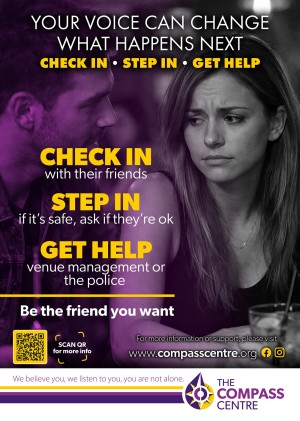
Check in with their friends if the person you are worried about is ok.
Let them know what has worried you about the situation
“Is your pal ok?”
“I saw your friend being led outside, just wanted to make sure they’re okay.”
“I noticed somebody keeping an eye on your friend, do you know them?”
Step In
Take safe action if someone is at risk.
Approach calmly: “Are you okay?”
Offer to stay with them, help them get to a safe place, or guide them back to friends.
Distract or interrupt if someone is behaving inappropriately, even a small intervention can prevent harm. “Hey, I’ve no seen you for ages! Come grab a drink with us.” “I think your pals are looking for you”
Check politely what their relationship is: “Hey, is this a friend? Just checking everyone’s okay.”
Always prioritise safety, yours and theirs.
Tip: Stay calm and confident, your presence alone can stop things from escalating.
Get Help
 Alert venue staff, bar or event security, or responsible adults around you.
Call 999 if the person is in immediate danger or has been harmed.
Help the person contact friends or family they trust.
Support them without judgment, let them know they’re not alone.
Remember: You don’t have to do it alone, getting help is still being a positive bystander.
